Taking the Spotlight
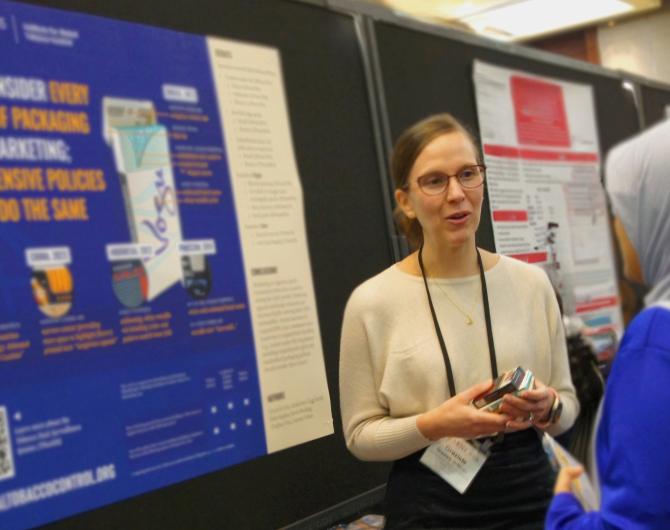
IGTC received awards for its research at the 2026 SRNT Annual Meeting.
Expand Your Knowledge

Newly updated in 中国人, English, Português, and Tiếng Việt, our six-module online course, “Global Tobacco Control: Learning from the Experts,” provides fundamental learning on key tobacco control topics including economics, industry tactics, and policy interventions. Create your free account to get started!
Visit Our YouTube Channel

Visit our YouTube channel to see updates from our faculty and staff as well as lectures from tobacco control experts across the globe as part of our Innovations in Tobacco Control series. Subscribe to be notified when we add a new video.
Featured Research

There is limited information on how smoke-free policy is implemented inside Vietnamese venues, including how different contextual factors may impact smoke-free compliance. This study addresses this gap and explores how key informants who manage Vietnamese restaurants, hotels, and hospitals – three venue types with low levels of compliance based on venue assessments5,6,7 – navigate understanding smoke-free laws and implementing the law in their venue.

IGTC conducted a series of focus group discussions involving 171 young people in the Philippines (ages 13–20), in January 2024, to understand the views, perceptions, and experiences of young Filipinos concerning e-cigarettes and vaping. Summarized in this fact sheet—and including direct statements from the teens and young adults who participated in the discussions—the findings provide evidence that supports policies such as raising the minimum purchase age and banning e-cigarette flavors to help limit access and exposure among Filipino youth.

Tobacco product display at the point of sale is a form of indirect advertising that normalizes and promotes tobacco consumption. In Mexico, a national ban on tobacco advertising (approved in 2022) prohibits tobacco product display at the point of sale—however, a 2024 study in seven Mexican cities, led by IGTC in partnership with Salud Justa, found compliance failures at nearly half of the points of sales researchers observed.

Tobacco companies offer retailers incentives to advertise their products. Exposure to point-of-sale (POS) advertising is associated with increased smoking experimentation, initiation, and relapse. POS advertising and retailer incentive programs are generally allowed in Indonesia. However, some provincial governments like Jakarta have adopted stronger provisions like a ban on indoor and outdoor advertisements at POS. This study explored retailers’ interactions with tobacco companies regarding advertising and promoting tobacco products in Jakarta, Indonesia.

Researchers searched four popular social media platforms in China—Douyin (TikTok), Weibo, Weixin (WeChat), and Xiaohongshu—to examine the marketing strategies used and product characteristics advertised by e-cigarette brands on social media. From text and imagery to hashtags and links, 300 posts were assessed for what information was—or was not—included, depicted, and contextualized. The resulting evidence can inform policy interventions that can help prevent people who do not use cigarettes from developing positive associations with e-cigarette products and brands.
Tobacco Watcher
Tobacco Watcher is an automated media monitoring and intelligence site that scans the news and provides you with current articles pertaining to your interests.

Perform an Analysis. Graph and identify peaks and falls in topic coverage online in a chosen timeframe.

Set Custom Alerts. Instantly receive any articles on a product or keyword or any topic of interest regularly.

Search Articles. Filter content based on theme: bans, industry, prevalence, quitting, and more.
Online Courses
Learning from the Experts is a free online course breaking down the fundamentals of tobacco control, including its history, surveillance, and impacts. This course will help individuals build, monitor, and assess interventions on any scale using case studies and examples from around the world.

With six themed modules, the course allows anyone from public health professionals to students to increase their understanding of tobacco control topics, including learning how to prevent harm as tobacco products change and evolve.
With three themed modules, this course teaches health care providers how to prevent harm as tobacco products change and evolve.
Containing multiple lessons within a single module, COVID-19 and Tobacco Use takes approximately 90–120 minutes to complete, on average. Updated in November 2025, the course provides an overview of currently available evidence on tobacco use and COVID-19 and addresses specific topics like the impact of smoking on COVID-19, the effects of nicotine at a molecular level, and more.
The Tobacco Pack Surveillance System (TPackSS)
TPackSS, developed with funding from Bloomberg Philanthropies through the Bloomberg Initiative to Reduce Tobacco Use, contains a visual database of cigarette packs from 14 low- and middle-income countries (LMIC) to monitor how tobacco companies are marketing their products and track their compliance with tobacco pack requirements including health warning labels.

Global Tobacco Control Progress Hub
The Global Tobacco Control Progress Hub offers tobacco control advocates a new online treaty monitoring platform with multiple user-friendly dashboards featuring more than 300 performance indicators from more than 180 reporting countries. Explore multi-year trends to monitor, analyze and report on global tobacco control progress through engaging color-coded maps and graphic visualizations.
Where We Work
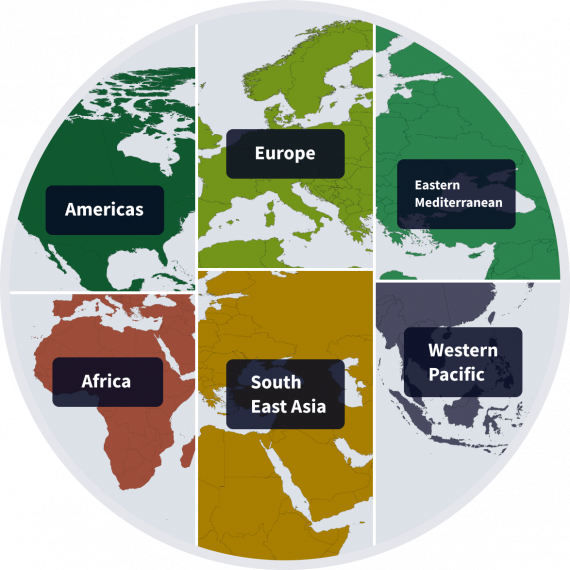
As a collaborating centre of the World Health Organization (WHO) since 2004, our work takes place around the globe. We concentrate primarily on the 10 priority countries of the Bloomberg Initiative to Reduce Tobacco Use - Bangladesh, Brazil, China, Indonesia, India, Mexico, Pakistan, the Philippines, Ukraine and Vietnam.
Through our work together and with other organizations, we have produced reports to support tobacco control action in low- and middle-income countries. Learn more about our projects by choosing a region to explore.